Leave Your Message

Top 10 Door Stopper Manufacturers for Global Buyers

Choosing a reliable Door Stopper manufacturer involves more than comparing catalog prices. Global buyers must examine material quality, production consistency, customization capability, and communication. A stainless-steel floor stop should resist corrosion near a humid entrance. A rubber wedge should hold firmly without marking polished tile. Small differences matter. They affect installation time, replacement rates, and customer trust.

This guide introduces ten manufacturers serving international purchasing needs. The selection considers manufacturing experience, product range, quality-control procedures, export support, and evidence of dependable delivery. Where available, attention is given to factory capabilities, certifications, sample policies, packaging, and response speed. These details help importers compare suppliers with clearer expectations, whether they purchase for hotels, offices, residential projects, or hardware distribution. Real-world use matters more than polished brochures. A product that looks strong online may still fail under repeated impact.

No ranking can suit every market. Requirements differ by door weight, mounting method, climate, budget, and local installation habits. Buyers should request current specifications, test samples, and written warranty terms before placing large orders. Verification remains essential. Some supplier information can change, and public materials may not reveal every limitation. That is worth acknowledging. The goal is not to promise a perfect choice, but to provide a practical starting point for careful sourcing. With measured comparison, buyers can identify a Door Stopper partner that balances durability, price, and dependable service over time.
Top 10 Door Stopper Manufacturers for Global Buyers

What Defines a Reliable Door Stopper Manufacturer

A reliable door stopper manufacturer proves consistency beyond a polished product sample. Buyers should examine material grades, load capacity, corrosion resistance, and installation performance. ANSI/BHMA A156.16 provides recognized testing guidance for auxiliary door hardware, including stops and holders. A serious factory should understand these requirements and share relevant test records.

Quality systems matter, but certification alone is not enough. The ISO Survey 2023 recorded 1,265,216 ISO 9001 certificates worldwide. This shows how common quality certification has become. It does not guarantee every batch performs equally. Ask for production inspection records, batch traceability, failure rates, and corrective-action reports. I also recommend testing samples after repeated impact, not only after installation. Real doors slam, shift, and face dusty floors. Small weaknesses appear quickly.

Tips: Request three production samples from different batches. Check screw threads, rubber hardness, plating uniformity, and mounting-hole accuracy. Confirm packaging protects surfaces during ocean transport. Ask about warranty terms and replacement speed. No factory is perfect. What matters is whether it identifies mistakes honestly and fixes them with evidence. A dependable supplier usually welcomes difficult questions, though some answers may still require verification through independent testing.

Top 10 Door Stopper Manufacturers for Global Buyers - What Defines a Reliable Door Stopper Manufacturer

A brand-neutral evaluation framework for comparing door stopper manufacturers

Rank Evaluation Dimension Reliable Manufacturer Benchmark Recommended Verification Evidence Why It Matters to Global Buyers
1 Product Compliance Products are designed and documented according to applicable door-hardware requirements, including relevant ANSI/BHMA auxiliary-hardware specifications where applicable. Current test reports, technical drawings, product datasheets, and clearly stated application limitations. Reduces installation risk and supports compliance with project specifications in different markets.
2 Material Selection Uses fit-for-purpose materials such as stainless steel, zinc alloy, brass, aluminum, EPDM, or NBR, with material specifications disclosed. Material certificates, alloy or polymer specifications, and representative production samples. Material choice affects corrosion resistance, impact strength, appearance, and service life.
3 Load and Impact Performance The manufacturer defines the intended door size, weight, mounting surface, and impact conditions instead of making unsupported universal load claims. Load tables, engineering calculations, test methods, and installation instructions. Prevents premature loosening, deformation, wall damage, and unsuitable product selection.
4 Corrosion Protection Finishes and base materials are selected according to indoor, coastal, humid, commercial, or outdoor exposure conditions. Surface-finish specifications, salt-spray or corrosion-test reports where relevant, and care instructions. Supports long-term appearance and function in varied climates and building environments.
5 Dimensional Consistency Critical dimensions, mounting-hole positions, thread sizes, and tolerances are controlled through documented production inspections. Approved drawings, inspection records, tolerance data, and first-article inspection samples. Improves interchangeability and reduces installation delays caused by fit problems.
6 Quality Management Maintains a documented quality-management process, preferably supported by a current ISO 9001 certification or equivalent internal controls. Certificate scope, audit information, incoming-material checks, process inspections, and final inspection records. Provides repeatable quality across production batches and export orders.
7 Functional Life Testing Conducts application-specific cycle, fastening, impact, and retention tests with a defined test method and acceptance criteria. Test plans, cycle counts, failure criteria, test dates, and corrective-action records. Helps buyers distinguish durable products from items supported only by visual inspection.
8 Customization Capability Can provide controlled options for dimensions, mounting styles, finishes, packaging, fasteners, and private-label documentation without changing approved specifications informally. Engineering-change procedures, sample approvals, packaging drawings, and written customization quotations. Supports different door systems, construction standards, and distribution requirements.
9 Export Documentation Provides accurate commercial invoices, packing lists, country-of-origin details, tariff information, shipping marks, and required market documentation. Sample export files, carton specifications, customs data, and documented shipping procedures. Reduces customs delays, classification disputes, and receiving errors.
10 After-Sales Support Offers installation guidance, replacement-part information, warranty terms, complaint handling, and traceability for production batches. Written warranty policy, response-time commitment, spare-part list, and corrective-action workflow. Protects project continuity and lowers the total cost of ownership after delivery.

Note: Suitability depends on door weight, opening frequency, mounting substrate, exposure conditions, and the applicable building or hardware requirements in the destination market.

Key Criteria for Comparing Global Door Stopper Suppliers

Top 10 Door Stopper Manufacturers for Global Buyers

Global buyers should compare door stopper suppliers beyond catalog photos and unit prices. Material choice matters. Stainless steel, zinc alloy, rubber, and reinforced polymers perform differently under repeated impact. Ask for material grades, surface treatment details, and corrosion test results. A polished sample may look excellent, yet hidden threads or weak adhesive can fail during installation.

Check load capacity through documented testing, not sales claims. Request dimensional tolerances, production samples, inspection records, and batch traceability. Suppliers with controlled tooling usually provide more consistent screw holes and base alignment. Confirm whether their quality process covers incoming materials, assembly, packaging, and final inspection. Small defects matter.

Review minimum order quantities, lead times, spare parts, and packaging strength. A supplier may offer customization, but mold fees and revision limits should be written clearly. Ask how they handle damaged cartons, delayed shipments, and inconsistent batches. Communication speed is useful, though it does not prove manufacturing ability. Factory audits, video inspections, and independent testing can reduce uncertainty. However, none replaces a production trial. I have seen attractive samples differ from later batches. That risk deserves attention. Compare payment terms, production capacity, export experience, and technical responses using the same checklist. A dependable supplier explains limitations instead of promising everything.

Top 10 Door Stopper Manufacturers for Global Buyers

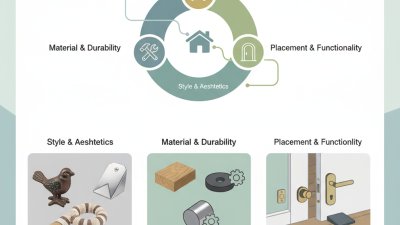
Key Criteria for Comparing Global Door Stopper Suppliers

This buyer evaluation framework assigns a 100% total weighting to the factors most commonly used when comparing international door stopper suppliers. Product quality and durability receive the highest priority, followed by manufacturing capability, delivery performance, and supplier support.

Top Door Stopper Manufacturers by Product Range and Strengths

The top ten door stopper manufacturers for global buyers are best compared by product range, not catalogue size alone. Reliable suppliers may offer floor, wall, hinge, magnetic, concealed, and heavy-duty models. This range supports homes, hotels, offices, hospitals, and industrial interiors.

Product depth matters. Floor-mounted stoppers suit solid surfaces and frequent traffic. Wall-mounted versions protect painted walls when floor drilling is undesirable. Magnetic designs hold doors open, but their holding force needs practical testing. Weak magnets may release under vibration or strong air movement. Stainless steel, zinc alloy, brass, rubber, and nylon options suit different environments. Material choice affects corrosion resistance, noise, appearance, and service life.

A strong manufacturer separates light residential products from commercial and heavy-duty ranges. Load ratings, impact tests, screw quality, and replacement parts reveal more than polished photographs. For coastal projects, buyers should request corrosion data instead of trusting generic claims. Custom finishes and packaging can help distributors serve different markets. Still, customization may increase minimum order quantities and complicate quality control. That trade-off deserves written review.

Experienced sourcing teams should compare drawings, samples, tolerances, and installation instructions. A sample can expose a loose hinge or sharp edge quickly. Manufacturers with engineering support can adjust hole spacing, buffer hardness, or mounting plates. However, technical assistance matters only when responses remain documented and consistent. Ask for inspection records, material declarations, and clear warranty terms. Small details matter.

Manufacturing Standards, Customization, and Quality Control

Top 10 Door Stopper Manufacturers for Global Buyers

A credible top-ten list should examine manufacturing standards, not only production volume or catalog size. Reliable manufacturers use stable materials, accurate tooling, and documented inspection procedures. Stainless steel, zinc alloy, rubber, and engineered plastics should match the door’s weight and operating environment.

Quality systems should cover incoming materials, dimensional checks, surface treatment, assembly, and final packaging. Ask for inspection records, batch traceability, and clear tolerance ranges. Practical experience shows that small tolerance errors can cause loose fittings or damaged floors.

Customization matters when standard products cannot fit a project. Manufacturers may adjust length, mounting holes, spring strength, finish, logo placement, or packaging. However, every change should receive a controlled drawing and sample approval. A sample can look excellent while hiding weak threads or uneven plating.

That is why drop tests, cycle tests, corrosion checks, and load tests deserve attention. No process is perfect. Even experienced factories can miss a defect during a busy production week.

Tips: Request a pre-production sample. Compare it with the approved drawing. Confirm material grades through supplier documents or independent testing.

Check whether the factory records defect rates and corrective actions. Ask how rejected parts are separated. Communication speed also matters, but it should never replace evidence. A low quotation may reflect thinner material, weaker testing, or unclear after-sales responsibility. Build a supplier scorecard covering standards, customization control, quality consistency, lead time, and inspection transparency.

How Global Buyers Can Select the Right Door Stopper Partner

Top 10 Door Stopper Manufacturers for Global Buyers

How Global Buyers Can Select the Right Door Stopper Partner

Choosing a door stopper partner requires more than comparing unit prices. Start with the product’s intended environment. A bathroom door may need corrosion-resistant materials. A warehouse door may require stronger impact protection. The details matter.

Ask manufacturers for material specifications, load data, surface treatment information, and sample availability. Check whether their testing reflects real installation conditions. A stopper that performs well in a showroom may fail beside a busy loading area. Request production photos, inspection records, and clear quality-control procedures. Reliable suppliers explain tolerances instead of hiding them.

Communication is equally important. Confirm minimum order quantities, lead times, packaging methods, and replacement policies before placing an order. A responsive partner should answer technical questions with practical evidence. They should also identify design limits honestly. That builds trust.

Do not choose by catalog appearance alone. Inspect the spring, mounting plate, screws, rubber contact point, and finish consistency. Small weaknesses become expensive during large projects. Samples help, but they do not reveal every production variation. This is where buyers need careful follow-up.

A useful scorecard can compare durability, customization, delivery stability, documentation, and service. Price deserves attention, not control. The cheapest option may create installation delays or frequent replacements. Review the first shipment critically, even when everything seems acceptable. Good sourcing includes room for correction.